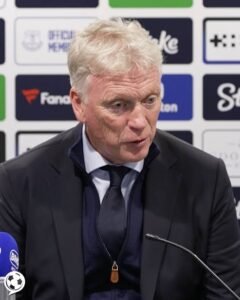
 In a stunning development that has sent shockwaves across English football, reports confirmed by ESPN indicate that Everton FC manager David Moyes has officially stepped down from his position amid mounting pressure and what sources describe as “significant errors” that have plagued the club in recent months. The announcement, which came just minutes ago, marks the end of yet another turbulent chapter in Everton’s modern history and raises urgent questions about the club’s immediate future.
A Sudden but Not Entirely Unexpected Exit
While the timing of the resignation may have surprised some supporters, many insiders suggest the writing had been on the wall. Everton’s recent performances in the Premier League have been inconsistent at best and deeply concerning at worst. A string of disappointing results, tactical miscalculations, and reported dressing room tensions had intensified scrutiny around Moyes’ leadership.
Club officials released a brief statement thanking Moyes for his “dedication, professionalism, and unwavering commitment” during his tenure, but stopped short of detailing the specific errors referenced in reports. According to insiders, the decision was mutual, though sources close to the situation suggest that mounting internal pressure made the move inevitable.
The Weight of Expectations
David Moyes’ association with Everton runs deep. Having previously managed the club for over a decade, he remains one of the most significant figures in its recent history. His earlier spell was widely regarded as a period of stability and competitiveness, as he consistently guided the Toffees to respectable league finishes and European qualifications.
However, football is an unforgiving industry, and nostalgia alone cannot shield any manager from scrutiny. This latest tenure came with immense expectations. Supporters hoped Moyes would restore discipline, identity, and tactical clarity. Instead, critics argue that the team appeared directionless at crucial moments, particularly in high-stakes fixtures.
Observers point to questionable squad selections, conservative tactical approaches in must-win games, and delayed substitutions that failed to change the momentum of matches. Defensive frailties became alarmingly frequent, and attacking cohesion seemed to vanish at critical junctures of the season.
The “Significant Errors” – What Went Wrong?
Though official details remain limited, analysts have speculated about several contributing factors:
1. Transfer Strategy Missteps:
Everton’s recruitment under Moyes reportedly lacked precision. Several signings failed to adapt quickly to the demands of the Premier League, leaving the squad imbalanced. Critics argue that resources were not allocated effectively to strengthen key weak points.
2. Tactical Rigidity:
In modern football, adaptability is often key. Moyes’ reliance on structured, defensively cautious systems may have limited Everton’s creativity and attacking output. Opponents appeared to exploit predictable patterns, particularly in midfield transitions.
3. Inconsistent Team Morale:
Reports suggest frustration among certain players regarding roles and opportunities. While Moyes is known for his disciplined management style, some insiders claim communication breakdowns may have affected squad harmony.
4. Pressure Management:
Everton’s fight to secure consistent results under increasing scrutiny intensified the spotlight on every mistake. The club’s supporters are among the most passionate in England, and dissatisfaction at Goodison Park grew more vocal in recent weeks.
Reaction from the Football World
The football community has responded swiftly. Pundits on major sports networks described the resignation as “disappointing but necessary,” while former players expressed mixed emotions. Some praised Moyes for his past contributions, while others emphasized the need for fresh ideas.
On social media, fans were divided. Many expressed gratitude for his historic contributions to Everton, recalling memorable victories and European nights. Others insisted that the club must prioritize long-term vision over sentiment.
Several high-profile figures within the Premier League acknowledged Moyes’ experience and resilience. Despite this setback, few doubt that the seasoned manager will remain a respected figure in football circles.
What This Means for Everton
Everton now faces a crucial crossroads. The board must act swiftly to appoint an interim manager or secure a long-term replacement capable of stabilizing the squad and restoring confidence. With league fixtures piling up, uncertainty could further destabilize performances.
Potential managerial candidates are already being speculated upon, though no official shortlist has been confirmed. The club’s immediate priority will be avoiding further slide in league standings while rebuilding trust with supporters.
Financial considerations may also influence the next appointment. Everton has navigated economic constraints in recent seasons, meaning strategic recruitment and tactical innovation will be vital moving forward.
A Legacy Complicated by Circumstance
David Moyes’ relationship with Everton is layered and complex. His earlier achievements cemented his status as one of the club’s most influential modern managers. Yet, football rarely allows past triumphs to outweigh present challenges.
This resignation does not erase his legacy, but it does highlight the demanding nature of top-flight football. Managers are judged not only by history but by immediate results and adaptability.
For Moyes, stepping down may offer an opportunity for reflection and recalibration. Throughout his career, he has demonstrated resilience—navigating challenges at various clubs and consistently earning respect for his professionalism.
The Road Ahead
As Everton prepares for its next chapter, supporters will hope for clarity, stability, and renewed ambition. The Premier League is fiercely competitive, and every managerial decision carries profound implications.
In the coming days, more details are expected to emerge regarding the circumstances surrounding Moyes’ departure. For now, the focus remains on steadying the ship and ensuring that the club regains its footing both on and off the pitch.
One thing is certain: this moment will be remembered as a pivotal turning point in Everton’s modern era. Whether it becomes the catalyst for resurgence or another chapter of uncertainty depends largely on the decisions made in the hours and weeks ahead.
Leave a Reply