
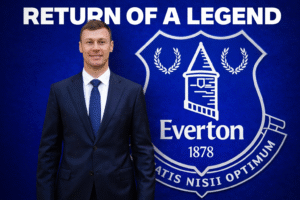
 In a moment that has sent waves of excitement through Merseyside and across the wider Premier League community, Everton FC head coach David Moyes has officially confirmed that legendary forward Duncan Ferguson is returning to the club — not as a player this time, but as their new senior coach.
For many Evertonians, this truly is the best news they could have hoped for.
The announcement marks more than just a coaching appointment. It represents a reunion of identity, a restoration of culture, and a powerful statement of intent from a club determined to rediscover its soul. In an era where football is often driven by analytics, global branding, and rapid turnover, Everton have chosen something deeper: legacy.
A Return That Feels Like Destiny
Duncan Ferguson is not just a former player. At Everton, he is folklore. He is the embodiment of Goodison Park’s grit, passion, and defiance.
When he first arrived from Rangers FC in the 1990s, few could have predicted the cult hero status he would achieve. Known affectionately as “Big Dunc,” Ferguson became synonymous with physical dominance, fearless leadership, and a fierce commitment to the badge. His towering headers, thunderous celebrations, and unapologetic aggression made him one of the most memorable figures of the Premier League era.
Now, years after hanging up his boots, he returns not to lead the line — but to help shape the future.
David Moyes, himself deeply intertwined with Everton’s modern history, described the appointment as “a powerful step forward rooted in who we are.” Having previously managed Ferguson during his first spell at the club, Moyes knows exactly what he brings — not just tactical insight, but presence.
“Duncan understands this club in a way very few people ever could,” Moyes reportedly told club media. “He knows what it means to wear the shirt. He knows what the fans expect. And most importantly, he knows how to demand standards.”
More Than a Coach — A Symbol
The role of senior coach places Ferguson in a position of significant influence. He will work closely with Moyes on first-team development, attacking structure, and — perhaps most importantly — mentality.
Everton have endured turbulent seasons in recent years. Relegation battles, managerial changes, financial pressures, and emotional strain have tested the club’s resilience. Through it all, supporters have longed for a reconnection to identity.
Ferguson’s return delivers exactly that.
During his previous coaching spells at Everton, including brief caretaker stints, he showed he could inspire immediate reactions from players. Performances under his temporary leadership were often characterized by intensity, direct play, and emotional commitment. Fans saw in him the passion they felt themselves.
Now, in a structured senior role, he has the opportunity to translate that energy into long-term influence.
Moyes and Ferguson: A Reunited Force
There is something poetic about this reunion.
David Moyes oversaw one of Everton’s most stable and competitive eras in the Premier League. During his tenure, the club regularly challenged for European places, developed emerging talent, and punched above its financial weight.
Ferguson was part of that backbone — a warrior on the pitch who helped define the team’s mentality.
Bringing them back together signals a return to principles that once made Everton formidable: discipline, work ethic, tactical organization, and emotional commitment.
This is not nostalgia for nostalgia’s sake. It is strategic memory.
Moyes understands modern football’s demands, but he also recognizes that Everton’s strength has always come from unity between players and supporters. Ferguson bridges that gap naturally.
What Ferguson Brings to the Dressing Room
Modern footballers operate in a highly technical, data-driven environment. But even in today’s game, leadership and emotional intelligence remain priceless.
Ferguson commands instant respect.
His playing career was defined by courage. He battled elite defenders, thrived in physical duels, and embraced responsibility in crucial moments. Young Everton forwards can now learn directly from someone who scored decisive goals under immense pressure.
Beyond technique, he offers something intangible: belief.
Players stepping onto the Goodison Park turf will look to the sidelines and see a man who once electrified that same stadium. That connection cannot be manufactured.
Ferguson also understands adversity. His career included injuries, controversies, suspensions, and setbacks — yet he remained resilient. That resilience mirrors Everton’s recent journey and could prove invaluable in shaping a mentally stronger squad.
A Message to the Fans
Everton supporters are among the most passionate in English football. They value loyalty. They value fight. They value authenticity.
The return of Duncan Ferguson sends a clear message: the club is listening.
In recent years, some fans felt disconnected from decisions made at boardroom level. This appointment, however, resonates emotionally. It says that Everton’s leadership recognizes the importance of cultural identity alongside tactical progress.
Social media reactions were immediate and overwhelmingly positive. From former players to lifelong season-ticket holders, the response reflected relief and renewed optimism.
“This is Everton,” many wrote.
Strategic Timing in the Premier League Landscape
The Premier League has never been more competitive. Financial disparities continue to widen, and clubs must maximize every edge they possess.
While some teams invest heavily in global superstars, Everton are investing in heritage and cohesion.
That does not mean abandoning ambition. Rather, it suggests building from a stable foundation.
Ferguson’s appointment complements Moyes’ structured approach. Together, they represent continuity, accountability, and experience.
In a league filled with tactical innovation, emotional unity can still be a decisive factor. Clubs that fight together survive together.
The Long-Term Vision
This move also hints at succession planning.
While Moyes remains fully committed to his managerial role, grooming internal leaders strengthens institutional stability. Ferguson’s senior coaching role may well prepare him for even greater responsibilities in the future.
His previous managerial experiences outside Everton have given him broader perspective. Returning now, he brings not only passion but maturity.
The club appears determined to blend tradition with evolution.
The Emotional Weight of Goodison Park
As Everton prepare for the next chapter in their storied history, including transitions that will shape the club’s future infrastructure and competitive ambitions, moments like this matter deeply.
When Ferguson steps onto the training ground in his new role, it will symbolize more than employment.
It will symbolize homecoming.
Supporters will remember his towering headers, his fist pumps toward the Gwladys Street End, and his refusal to ever back down. Now they will watch him channel that same fire into mentoring a new generation.
The Best News They Could Hope For
Football often delivers surprises — some joyous, some painful.
This announcement falls firmly in the first category.
For Everton, this is not merely about hiring a senior coach. It is about reclaiming belief. It is about reinforcing standards. It is about reminding everyone what the club stands for.
David Moyes and Duncan Ferguson together once helped define an era of stability and competitive pride. Now, they aim to restore that spirit in a challenging modern landscape.
In the grand theatre of the Premier League, where narratives shift quickly and loyalty can feel fleeting, Everton have chosen continuity of heart.
And for fans who have endured uncertainty, that feels like hope.
As the new season unfolds, all eyes will turn to Goodison Park. Not just to see tactics and formations — but to witness the revival of a bond between club legend and club identity.
Leave a Reply