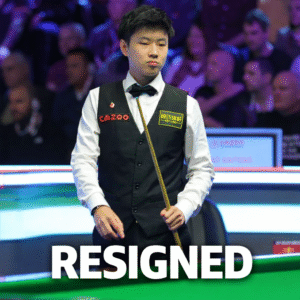
 In a bombshell development set to redefine the landscape of professional snooker, Chinese cue prodigy Zhao Xintong — widely regarded as one of the most electrifying talents to emerge from the sport in a generation — has officially submitted his resignation to the World Professional Billiards and Snooker Association (WPBSA), ESPN has confirmed. The announcement, delivered in a formal letter dated this week, has sent seismic shockwaves through the international snooker community, prompting urgent speculation about the future of the game at both elite and grassroots levels.
Zhao’s decision — coming only months after his extraordinary rise to snooker supremacy — is being described by industry insiders as one of the most perplexing and consequential moves in recent memory.
—
The Phenomenon: A Brief Look Back at a Meteoric Rise
Few stories in modern sports match the improbable trajectory of Zhao Xintong. Born in China, Zhao steadily carved his way up the competitive snooker ranks, showing signs of brilliance early in his career. His raw talent, fearless attacking play, and creative shot-making quickly caught the attention of fans, commentators, and fellow players alike.
Yet until recently, Zhao’s career had been anything but smooth:
In January 2023, Zhao was among a group of Chinese players suspended amid a match‑fixing investigation by the WPBSA; although he was not found to have fixed any matches himself, he admitted to placing bets on matches and was sanctioned accordingly.
His professional status lapsed after the ban, and he returned to competition via amateur and Q Tour events.
Against all odds, Zhao not only qualified for snooker’s most prestigious tournament — the World Snooker Championship — but went on to win the title by defeating Wales’ Mark Williams 18‑12 at the Crucible Theatre in Sheffield.
That historic victory made Zhao the first champion from China, and the first amateur in history to lift the World Championship trophy — a feat that captivated millions worldwide and instantly elevated his status to global stardom.
His triumph wasn’t just a sporting achievement; it was a cultural moment. It crystallised China’s growing influence in a sport historically dominated by British and European players, energising a massive audience in Asia and beyond.
Since then, Zhao has enjoyed further success, including winning the 2026 World Grand Prix, adding to his ranking titles and solidifying his reputation as a generational talent.
—
The Shocking Resignation: What Happened?
In an exclusive confirmation to ESPN, Zhao Xintong’s camp says the 28‑year‑old submitted his resignation to the WPBSA “effective immediately,” citing irreconcilable differences with the association’s current direction and governance approach. While the full letter has not yet been publicly released, sources close to Zhao indicate that the resignation stems from:
Frustration with how the organisation handled disciplinary and transparency issues, including the aftermath of the 2023 match‑fixing scandal.
Disagreements over player welfare policies, especially regarding contracts, ranking points, and tournament entry classifications.
A desire to refocus his career away from professional tour politics, potentially toward new ventures or founding an alternative competitive circuit.
This unprecedented move by a reigning major champion — and at a relatively young age — has set off a firestorm of reaction within the snooker world.
—
Reactions from Players and Governing Bodies
WPBSA
In a brief statement released following ESPN’s report, the WPBSA acknowledged receipt of Zhao’s resignation letter and confirmed that they are reviewing the terms of his departure.
A spokesperson said:
> “We have received Mr Zhao Xintong’s communication regarding his intent to resign from his professional association role and will respond fully after due consideration. The WPBSA remains committed to supporting all players and safeguarding the integrity and future of snooker.”
This wording, however, was notably diplomatic and did not address the specifics of Zhao’s cited concerns.
Fellow Players
The response from the professional circuit has been mixed:
Some peers have expressed shock and disappointment, noting that Zhao remains one of the sport’s brightest stars both on and off the table.
Others have quietly acknowledged long‑standing frustrations with issues such as the distribution of ranking points, scheduling, and transparency in disciplinary matters — themes that have only become more acute in recent years.
A senior player, speaking on condition of anonymity, told ESPN:
> “Zhao’s resignation highlights deeper fissures in how the sport is evolving. Whether you agree with his reasons or not, this sends a massive message.”
—
What This Means for Snooker’s Future
Zhao’s resignation opens up numerous unsettling questions for the sport’s future:
1. Is Zhao Walking Away From Competitive Snooker?
While the resignation is directed at the WPBSA — the sport’s governing body — it does not necessarily mean Zhao is retiring from competition. Early speculation suggests he may explore other competitive frameworks, such as invitational leagues, exhibition tours, or new federations.
Alternatively, Zhao may be positioning himself for a leadership role outside the WPBSA, potentially advocating for reforms or player representation in international governance.
2. Will This Inspire Other Players to Push for Reform?
Within professional snooker, there has long been simmering discontent over:
Tour finances and prize money distribution
Ranking point systems and qualification paths
Transparency around disciplinary decisions, especially post‑scandals
Zhao’s bold step could embolden others to speak out more openly, potentially catalysing deeper structural changes within the sport.
3. Implications for Asian Snooker Growth
Zhao has been a symbol of snooker’s explosive popularity in China and across Asia. His departure from professional governance could impact sponsorship deals, media rights negotiations, and the sport’s expanding fan base in markets where his brand has been central.
Chinese companies, broadcasters, and emerging talent systems — which have invested heavily in snooker’s growth — may now be forced to reassess their strategy in relation to the professional circuit.
—
Legacy and the Road Ahead
If Zhao truly steps away from the WPBSA structure, it will not diminish the legacy he has already etched into the sport’s history. From comeback king to world champion and household name, his career to date has reshaped perceptions and opened doors for future generations of players across Asia and beyond.
What does remain uncertain is how his resignation will affect the game’s governance, competitive balance, and strategic direction in the years ahead.
Leave a Reply