
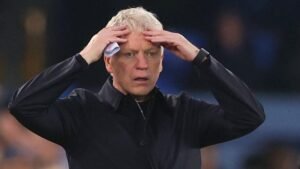
 In a stunning development that has sent ripples across the footballing world, Everton FC have officially confirmed that head coach David Moyes has stepped down from his role. The announcement, first reported by ESPN, comes after a turbulent period marked by inconsistent performances, tactical concerns, and growing pressure from fans and stakeholders alike.
For a club steeped in history and pride, the departure of Moyes signals yet another chapter in Everton’s ongoing struggle to rediscover stability and identity in the modern Premier League era.
A Return That Sparked Hope
When David Moyes returned to Everton, many supporters saw it as a homecoming filled with promise. Having previously managed the club from 2002 to 2013, Moyes was widely credited with transforming Everton into a consistent top-half Premier League side, even guiding them into European competitions.
His return was expected to restore discipline, structure, and a sense of direction. Fans hoped he would rekindle the resilience and tactical organization that once defined Everton under his leadership.
However, football often defies nostalgia.
The Challenges That Led to His Exit
Moyes’ second stint at Everton quickly became overshadowed by a series of challenges that proved difficult to overcome. While the club showed occasional flashes of brilliance, consistency remained elusive.
Several key issues contributed to his resignation:
1. Tactical Struggles
Moyes faced criticism for his conservative approach in matches where Everton needed to be more aggressive. Supporters and analysts alike questioned his reluctance to adapt tactics against stronger opponents, often resulting in predictable gameplay.
2. Inconsistent Results
Everton’s form fluctuated throughout the season. Victories against mid-table teams were often followed by disappointing losses, leaving the club unable to build momentum. This inconsistency ultimately hurt their league standing.
3. Player Performance and Injuries
A string of injuries to key players further complicated matters. Squad depth became a concern, and the inability to field a consistent starting eleven affected team chemistry and performance.
4. Fan Pressure
Everton fans are known for their passion and loyalty, but patience began to wear thin. Home games increasingly saw visible frustration from the stands, with calls for change growing louder as results failed to improve.
5. Internal Expectations
Behind the scenes, expectations from the club’s board remained high. Everton’s ambition to compete at a higher level clashed with the reality of their on-field struggles, placing additional pressure on Moyes.
The Official Statement
In an official club statement, Everton acknowledged Moyes’ decision to step down, emphasizing mutual respect between both parties.
“David Moyes has informed the club of his decision to step down as head coach. We thank him for his dedication, professionalism, and service during a challenging period. Everton Football Club wishes him the very best for the future.”
Moyes himself also released a brief statement:
“It has been an honor to return to Everton and work with this group of players and staff. Unfortunately, results have not met the expectations we all share. I believe stepping aside is the right decision for the club moving forward.”
Reaction Across the Football World
The news quickly sparked reactions from pundits, former players, and fans. Many expressed sympathy for Moyes, acknowledging the difficult circumstances he faced.
Some analysts pointed out that Everton’s issues run deeper than coaching alone, citing recruitment problems, financial pressures, and long-term instability within the club’s structure.
Others, however, argued that a managerial change was necessary to inject fresh ideas and energy into the squad.
On social media, fan reactions were mixed. While some supporters thanked Moyes for his efforts and legacy, others viewed his departure as overdue.
Everton’s Ongoing Struggles
Moyes’ resignation highlights broader issues that have plagued Everton in recent years. Once considered a strong contender for European qualification, the club has struggled to maintain consistency in the highly competitive Premier League.
Frequent managerial changes have prevented the team from establishing a clear identity. Each new coach brings a different philosophy, often leading to a lack of continuity.
Additionally, recruitment decisions have been scrutinized, with some signings failing to deliver expected performances. Financial constraints have also limited the club’s ability to compete with wealthier rivals.
What Happens Next?
With Moyes stepping down, Everton now face a critical decision regarding their next head coach. The choice will play a significant role in shaping the club’s immediate and long-term future.
Potential candidates are already being discussed, ranging from experienced Premier League managers to emerging coaches with modern tactical approaches.
The board will likely prioritize:
A manager capable of stabilizing results quickly
Someone who can develop young talent
A leader who can rebuild confidence within the squad
In the short term, an interim manager may be appointed to guide the team while a permanent replacement is identified.
The Players’ Perspective
For Everton’s players, Moyes’ departure marks a moment of reflection. Coaching changes often bring uncertainty, but they also present opportunities.
Some players may benefit from a fresh tactical system that better suits their strengths. Others will need to adapt quickly to maintain their place in the squad.
Team morale will be a key factor in the coming weeks. The dressing room must remain united to navigate this transition period successfully.
Moyes’ Legacy at Everton
Despite the challenges of his second tenure, David Moyes’ legacy at Everton remains significant.
During his first spell, he transformed the club into a competitive force, earning respect across English football. His ability to maximize limited resources and develop players was widely praised.
While his recent stint may not have lived up to expectations, it does not erase the impact he previously had on the club.
Football is often defined by results, but history tends to remember contributions over time. Moyes’ name will still be associated with one of Everton’s most stable and successful periods in the modern era.
A Turning Point for Everton
Moyes’ resignation could represent a turning point for Everton. Whether it leads to improvement or further instability will depend on the decisions made in the coming weeks.
The club has an opportunity to reset, reassess its strategy, and build a stronger foundation for the future.
However, the Premier League offers little time for adjustment. Immediate results will be crucial, especially if Everton find themselves battling near the lower end of the table.
Conclusion
The departure of David Moyes as head coach of Everton FC marks the end of a challenging chapter for both the manager and the club.
While his return was filled with hope and nostalgia, the realities of modern football proved difficult to overcome. Tactical issues, inconsistent performances, and mounting pressure ultimately led to his decision to step aside.
As Everton move forward, the focus will shift to rebuilding and finding a new direction. For fans, players, and the wider football community, the coming months will be crucial in determining whether this moment becomes the بداية of a revival—or another step in a prolonged period of uncertainty.
Leave a Reply