ESPN CONFIRMED: Sunderland AFC Approves $85.3 Million Stadium Renovation Project for 2026 and but…see more
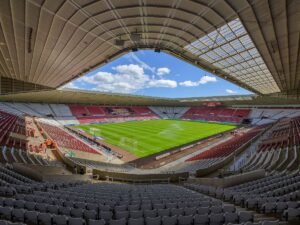
While the announcement has been circulating through sports media outlets in a breaking-news style format, club insiders describe the plan as one of the most ambitious stadium upgrades in the club’s modern history. The project is expected to reshape the identity of Sunderland’s home ground and position the club for long-term commercial and sporting growth.
—
A Major Step in Sunderland’s Long-Term Vision
According to sources close to the club’s board, the renovation project was approved after months of internal review, feasibility studies, and financial planning. The aim is not only to modernize facilities but also to ensure Sunderland AFC remains competitive both on and off the pitch in an increasingly commercialized football landscape.
The proposed $85.3 million investment is expected to cover a wide range of upgrades, including structural improvements, fan experience enhancements, hospitality expansion, and sustainability initiatives.
Club executives reportedly view the stadium as the “heart of Sunderland’s identity,” emphasizing that any redevelopment must preserve tradition while pushing the club into a new era of infrastructure excellence.
One senior official, speaking on condition of anonymity, described the project as:
> “A once-in-a-generation opportunity to redefine what Sunderland AFC represents to its supporters and the wider football world.”
—
Capacity Expansion and Structural Upgrades
One of the central elements of the renovation is expected to be a modest but meaningful increase in stadium capacity. While the exact figures remain under review, early planning suggests an expansion designed to accommodate thousands of additional supporters without compromising comfort or safety standards.
The structural improvements are expected to include:
Reinforced seating tiers and improved sightlines
Expanded lower-tier sections for home supporters
Modernized roofing systems to improve weather protection
Enhanced accessibility infrastructure for disabled fans
Engineers working on preliminary designs are also believed to be exploring ways to improve crowd flow in and out of the stadium to reduce congestion on matchdays, particularly during high-profile fixtures.
—
A New Era of Fan Experience
Beyond physical expansion, the renovation project places significant emphasis on fan experience. Sunderland AFC is reportedly aiming to transform the stadium into a year-round entertainment destination rather than a venue used exclusively on matchdays.
Planned improvements include upgraded concourse areas, new food and beverage outlets, interactive fan zones, and digital engagement screens throughout the stadium.
Supporters can also expect a revamp of seating comfort, improved legroom in selected sections, and upgraded hospitality suites designed to attract corporate partnerships and premium ticket holders.
A club representative emphasized the importance of balancing tradition with innovation:
> “We want fans to feel the history of Sunderland the moment they walk in, but also enjoy the comfort and technology of a modern football arena.”
—
Technology and Smart Stadium Integration
A significant portion of the $85.3 million budget is expected to be allocated toward smart stadium technology. This includes high-speed connectivity upgrades, mobile ticketing improvements, and real-time in-seat ordering systems.
The club is also reportedly considering implementing advanced LED lighting systems, upgraded giant screens, and immersive pre-match entertainment displays designed to enhance the atmosphere inside the stadium.
Security systems are also set to be modernized, with facial recognition entry points and AI-assisted crowd management tools being discussed during planning phases.
These technological upgrades aim to bring Sunderland AFC in line with some of the most advanced stadiums in European football.
—
Sustainability at the Core of the Project
Environmental responsibility is another key pillar of the renovation plan. Club officials are said to be committed to reducing the stadium’s carbon footprint and aligning with modern sustainability standards.
Proposed eco-friendly initiatives include:
Installation of solar panel systems on stadium roofing
Rainwater harvesting for pitch maintenance
Energy-efficient LED lighting across all facilities
Waste reduction and recycling programs on matchdays
Sustainability consultants working with the club have reportedly advised that the upgrades could significantly reduce annual operating costs while improving environmental performance.
—
Economic Impact on the Local Community
The redevelopment project is expected to have a significant economic ripple effect across Sunderland and surrounding areas. Local construction firms, contractors, and suppliers are expected to benefit from the large-scale infrastructure work.
During the construction phase, hundreds of temporary jobs could be created, ranging from engineering and architecture roles to hospitality and logistics support.
City officials have reportedly welcomed the project, viewing it as a boost to local regeneration efforts and tourism potential.
A local economic advisor noted:
> “A project of this scale doesn’t just change a stadium—it changes the entire surrounding economy. It brings investment, attention, and long-term opportunity.”
—
Fan Reactions: Excitement and Cautious Optimism
As news of the proposed renovation spread, Sunderland supporters reacted with a mix of excitement, curiosity, and cautious optimism.
Many fans expressed enthusiasm about the idea of a modernized stadium that could enhance atmosphere and comfort. However, others raised concerns about potential ticket price increases and whether the club might risk losing some of its traditional identity in the process.
On social media, discussions quickly emerged about balancing modernization with heritage, with some supporters urging the club to preserve iconic stadium features that carry historical significance.
One long-time fan summarized the sentiment:
> “We want progress, but we don’t want to lose what makes Sunderland special. The stadium is part of our soul.”
—
Financial Structure and Funding Model
While the full financial breakdown has not been officially disclosed, the $85.3 million investment is expected to be funded through a combination of club revenue, long-term financing agreements, sponsorship partnerships, and potential naming-rights considerations.
The possibility of a commercial naming rights deal has sparked debate among supporters, as it could significantly offset renovation costs but also alter the traditional identity of the stadium.
Club executives are believed to be carefully weighing commercial benefits against supporter sentiment before making any final decisions.
—
Timeline and Construction Phases
If the project proceeds according to plan, construction is expected to begin in phases to avoid major disruption to the football calendar. Early groundwork and design finalization could start in late 2025, with visible stadium upgrades rolling out throughout the 2026 season.
The club aims to ensure that Sunderland AFC can continue playing home fixtures with minimal relocation or scheduling disruption during the renovation period.
Project managers have reportedly developed contingency plans to maintain safety standards and fan accessibility throughout the construction process.
—
Potential Risks and Challenges
Despite widespread optimism, the project is not without challenges. Rising construction costs, logistical constraints, and potential delays could impact the timeline and overall budget.
Additionally, maintaining team performance during ongoing construction work could present operational difficulties, particularly if sections of the stadium are temporarily closed or restricted.
Financial analysts also caution that large-scale stadium investments must be carefully managed to avoid long-term debt burdens.
—
Looking Ahead: A Transformative Moment for the Club
If successfully completed, the $85.3 million renovation project could mark a defining moment in Sunderland AFC’s modern history. It represents not just a physical upgrade, but a symbolic step toward renewed ambition, financial stability, and competitive relevance.
For supporters, the stadium has always been more than just a venue—it is a landmark of identity, pride, and tradition. This redevelopment aims to preserve that legacy while preparing the club for the demands of modern football.
As the planning stage continues, anticipation is building around what Sunderland’s future home will ultimately look like—and how it will shape the next chapter of the club’s story.












Post Comment