
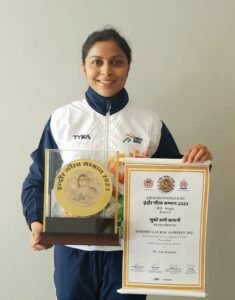
 In a moment that has electrified the global snooker community, Indian cue sports icon Amee Kamani delivered what many are calling the “best news we could hope for.” The announcement, made during a packed media session attended by players, officials, and fans connected to the World Professional Billiards and Snooker Association (WPBSA), has sparked celebration, admiration, and renewed optimism for the future of women’s snooker.
For years, Amee Kamani has been one of India’s most respected figures in cue sports — admired not only for her technical excellence on the table but also for her resilience in navigating a sport historically dominated by men. Now, in a development that has left supporters around the world speechless, Kamani has confirmed a major new chapter in her career — one that blends competition, leadership, and advocacy in a way few anticipated.
A Career Built on Precision and Perseverance
Before diving into the announcement itself, it’s important to understand why this moment carries such weight.
Amee Kamani’s journey in snooker has never been about shortcuts. Rising through domestic ranks in India, she earned recognition as one of the country’s leading female snooker talents. Her calm temperament, strategic shot selection, and mental toughness helped her compete consistently at international events, including tournaments connected to the Women’s World Snooker circuit.
Snooker demands extraordinary concentration. Frames can stretch for long periods, with momentum shifting based on a single misjudged safety shot or positional error. Kamani developed a reputation for thriving under precisely these conditions. Her break-building ability and tactical awareness made her a formidable opponent on any table.
But beyond trophies and rankings, Kamani became a symbol — especially for aspiring female players across South Asia who saw in her proof that excellence in cue sports was attainable.
The Announcement That Changed Everything
During the WPBSA-linked event, Kamani stepped to the podium with visible composure, yet those who know her well sensed the significance of what was coming.
“I’ve spent my life competing,” she began. “Now, I want to spend the next chapter building — building opportunities, building platforms, and building belief.”
The room fell silent.
Kamani announced three interconnected initiatives:
1. A renewed competitive commitment to the international circuit, with a targeted campaign aimed at major women’s championships over the next two seasons.
2. The launch of a structured snooker development academy for girls and young women in India, designed to provide coaching, mentorship, and tournament exposure.
3. A collaborative advisory role within WPBSA-supported women’s development programs, focusing on expanding participation in emerging snooker markets.
The impact was immediate. Applause erupted from players and officials alike. Social media platforms lit up with congratulatory messages. Commentators described the announcement as a “turning point” for women’s snooker in Asia.
A Return to the Big Stage
While Kamani has always remained active in the sport, injuries and scheduling constraints in recent seasons limited her international appearances. Her declaration of a full-scale competitive return was met with excitement.
“I still have unfinished business,” she said with a smile. “There are frames I want to win, matches I want to fight for, and titles I want to challenge.”
This renewed competitive drive is significant. Women’s snooker has grown steadily, with increased visibility and structured tours providing more consistent competition. Kamani’s presence on the circuit adds not only skill but star power — something crucial for attracting sponsorship and audience engagement.
Her comeback campaign is expected to include appearances at major ranking events and invitational tournaments, where her tactical style and experience could prove decisive.
Building the Next Generation
Perhaps even more impactful than her return to competition is the academy initiative.
Cue sports infrastructure for women in many countries, including India, remains limited compared to other disciplines. Access to coaching, quality tables, and structured tournaments can determine whether young talents flourish or fade.
Kamani’s academy aims to address precisely these gaps. According to her statement, the program will offer:
Professional coaching certified under recognized standards
Access to competitive leagues and ranking events
Mentorship sessions focused on mental strength and career planning
Scholarship opportunities for underprivileged players
By combining training with mentorship, Kamani hopes to create an ecosystem rather than a one-off training centre.
“Talent is everywhere,” she noted. “Opportunity is not.”
Those four words resonated deeply with many within the WPBSA community, which has been working to broaden participation beyond traditional strongholds.
A Voice in Governance and Growth
Kamani’s advisory role in WPBSA-supported initiatives adds another layer to her announcement.
Historically, athletes transitioning into governance roles bring invaluable perspective. They understand the pressures players face — travel logistics, funding constraints, ranking pressures, and mental strain. Kamani’s lived experience positions her to advocate effectively for female players navigating these challenges.
Officials welcomed her involvement, describing it as a “bridge between grassroots development and elite competition.”
The timing is significant. Women’s snooker is in a phase of strategic expansion, with efforts underway to increase tournament visibility, sponsorship alignment, and youth engagement globally. Having a respected figure like Kamani contributing to that process strengthens its credibility.
A Cultural Shift
In many parts of the world, women in cue sports still confront stereotypes. Snooker clubs have historically skewed male in participation and visibility. Breaking that pattern requires both policy change and visible role models.
Kamani embodies the latter.
Her journey — balancing training, competition, and advocacy — challenges outdated assumptions about who belongs at the snooker table. For young girls watching her announcement, the message was unmistakable: excellence in precision sports is not defined by gender.
The emotional reaction from fans reflected more than admiration for a single athlete. It reflected hope that women’s snooker is entering a new era of structural support and recognition.
Global Reaction
Messages poured in from fellow players across Europe, Asia, and Africa. Many described Kamani’s decision as “inspiring” and “transformative.”
Commentators linked to the WPBSA praised her holistic approach — not merely returning to chase titles, but investing in the sport’s future simultaneously.
Snooker enthusiasts also highlighted the symbolic power of her announcement coming from India, a nation with a rich cue sports heritage but evolving female participation rates. Her leadership could accelerate growth not only domestically but across neighboring regions.
The Personal Dimension
Behind the headlines lies a personal story of dedication.
Elite snooker demands intense solitary practice. Hours spent refining cue action, mastering safety exchanges, and building stamina often occur away from public attention. Kamani’s recommitment signals renewed hunger for that grind.
“I love this game,” she said simply. “Every time I chalk my cue, I remember why I started.”
That authenticity — passion grounded in years of effort — may be her most compelling attribute.
The Road Ahead
What does this mean for the future?
In the short term, fans can anticipate Kamani’s reappearance at major women’s tournaments, where her experience will test rising stars. In the medium term, her academy could begin producing structured pathways for young Indian players seeking international careers. Long term, her governance involvement could influence policy decisions shaping global women’s snooker.
It is rare for a single announcement to touch competition, development, and leadership simultaneously. That is why observers described the news as “the best we could hope for.”
Snooker thrives on precision — angles calculated, risks weighed, outcomes anticipated. Yet its growth depends equally on vision. Amee Kamani’s announcement demonstrated both.
She is not merely returning to the table. She is expanding it — inviting more players to take their place, shaping systems that sustain opportunity, and reminding the WPBSA world that progress is built frame by frame.
As applause faded and cameras lowered, one thing was clear: this was more than a career update. It was a declaration of purpose.
And for women’s snooker, it may well mark the beginning of its most exciting chapter yet.
Leave a Reply