
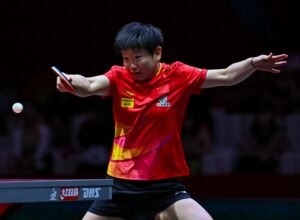
In a development that has quickly captured the attention of the global table tennis community, Chinese table tennis sensation Wang Chuqin has been fined 500 yuan following an incident of unsportsmanlike conduct during a competitive match.
The fine, though modest in financial terms, has sparked widespread conversation among fans, analysts, and fellow athletes about professionalism, emotional control, and the pressures of elite-level sport.
—
The Incident That Triggered the Fine
The controversy unfolded during a tense match in a major international competition, where Wang Chuqin was locked in a fiercely contested battle. Known for his explosive playing style and intense focus, Wang appeared visibly frustrated after losing a crucial point late in the match.
According to reports, the young star struck the table with his paddle and engaged in a brief but noticeable exchange with the umpire over a disputed call. While the situation did not escalate into anything more serious, officials deemed the reaction inappropriate under the sport’s code of conduct.
Tournament referees reviewed the incident shortly after the match and concluded that Wang’s behavior constituted unsportsmanlike conduct, leading to the issuance of a 500 yuan fine.
—
Official Response from Tournament Authorities
In an official statement, tournament organizers emphasized their commitment to maintaining discipline and respect within the sport:
> “Players are expected to uphold the highest standards of professionalism at all times. While we understand the emotional intensity of competition, conduct that undermines the spirit of the game will not be tolerated.”
The statement clarified that the fine serves as a warning rather than a severe punishment, indicating that the incident was viewed as relatively minor but still worthy of formal action.
—
Wang Chuqin Responds
Wang Chuqin has since addressed the situation, expressing regret over his actions. Speaking after the match, he acknowledged that emotions got the better of him in a critical moment:
“I was frustrated in that moment and didn’t handle it the right way. I respect the officials and the game, and I accept the decision. I will learn from this.”
His response has been seen by many as mature and responsible, helping to defuse some of the criticism that initially followed the incident.
—
Reaction from Fans and Experts
The reaction from the table tennis world has been mixed. While some fans criticized Wang for losing composure, others defended him, pointing out the immense pressure athletes face at the highest level.
Several analysts noted that emotional outbursts are not uncommon in high-stakes matches, particularly when players are competing for titles, rankings, and national pride.
A former professional player commented:
“Wang is a passionate competitor. That intensity is part of what makes him great. But at the same time, learning to control those emotions is essential if he wants to maintain his reputation at the top.”
—
The Pressure of Being a Rising Star
At just a young age, Wang Chuqin has already established himself as one of the brightest talents in international table tennis. His rapid rise has come with heightened expectations—not only to win matches but also to represent the sport with professionalism.
Elite table tennis is a game of razor-thin margins, where a single point can shift momentum dramatically. In such an environment, emotional control becomes just as important as technical skill.
Sports psychologists often emphasize that mental discipline is a defining trait of champions. Managing frustration, especially in moments of adversity, is crucial for sustained success.
—
Is the Punishment Fair?
The 500 yuan fine has also prompted debate about whether the punishment fits the offense. Some argue that the penalty is too lenient and does little to deter similar behavior. Others believe it strikes the right balance, serving as a reminder without being overly punitive.
Compared to other sports—where fines can reach thousands of dollars or include suspensions—the sanction appears relatively mild. However, within table tennis, such disciplinary actions carry symbolic importance.
They reinforce the sport’s emphasis on respect, discipline, and fair play—values that are central to its global image.
—
What This Means Going Forward
For Wang Chuqin, the incident is unlikely to have a lasting negative impact on his career. If anything, it may serve as a valuable learning experience.
Many great athletes have faced similar moments early in their careers, using them as stepping stones toward greater maturity and composure. How Wang responds in future matches will ultimately shape the narrative.
Fans will be watching closely—not just for his performance, but for how he handles pressure moving forward.
—
A Reminder About Sportsmanship
At its core, this incident highlights an important aspect of professional sports: the balance between passion and control.
Competition naturally brings out strong emotions, but maintaining respect for opponents, officials, and the game itself is essential. For young players looking up to stars like Wang Chuqin, these moments serve as powerful lessons.
—
Conclusion
While the fine of 500 yuan may seem minor, the conversation it has sparked is anything but. It underscores the expectations placed on elite athletes and the importance of composure under pressure.
For Wang Chuqin, this is likely just a small bump in an otherwise promising career. With his talent and determination, he remains a key figure in the future of table tennis.
And as the sport continues to evolve, moments like this remind everyone—players and fans alike—that greatness is defined not only by skill, but also by character.
Leave a Reply