
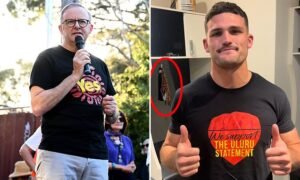
Australian rugby league star Nathan Cleary has found himself at the center of public debate after sharing a video expressing support for the Indigenous Voice to Parliament, a proposal aimed at recognizing Aboriginal and Torres Strait Islander peoples in the Australian Constitution and giving them a formal advisory body on matters affecting their communities.
Cleary, one of the NRL’s most high-profile players and a key figure for the Penrith Panthers and the NSW Blues, appeared in a short video circulated on social media encouraging Australians to engage with the issue and consider voting in favor of the Voice. In the video, Cleary spoke about the importance of listening to Indigenous perspectives and supporting measures that promote recognition, inclusion, and long-term outcomes for First Nations communities.
While the message was welcomed by many supporters, community leaders, and advocacy groups, it also triggered a wave of backlash from critics who argued that athletes should remain neutral on political matters. Some fans accused Cleary of using his platform to influence public opinion on a complex constitutional issue, while others questioned whether sports figures should be involved in political campaigns at all.
The backlash quickly spread across social media platforms, with comments ranging from respectful disagreement to more hostile reactions. A small but vocal group called for boycotts of Cleary’s games or sponsors, claiming that his stance alienated fans who hold opposing views. Others suggested that his endorsement oversimplified a nuanced debate and urged public figures to avoid framing the issue in emotional terms.
Despite the criticism, many voices came to Cleary’s defense. Fellow athletes, journalists, and supporters pointed out that public figures, like all citizens, are entitled to express their views on national issues. They argued that athletes have long played a role in social and political conversations, both in Australia and internationally, and that using a public platform to advocate for social justice is neither new nor inappropriate.
Supporters also noted that Cleary’s message did not attack opposing viewpoints but instead focused on respect, understanding, and participation in the democratic process. For them, the backlash highlighted the broader cultural tension surrounding the Voice debate rather than any wrongdoing by the player himself.
Cleary has not escalated the controversy and has largely maintained a measured approach in response. Rather than engaging directly with critics, he has continued to focus on his football commitments and has not issued any inflammatory statements. This restraint has been viewed by some observers as an effort to prevent the conversation from becoming more polarized.
The incident reflects a wider pattern seen during major national debates, where prominent figures from sport, entertainment, and business are increasingly expected to declare positions—or are criticized when they do. As the Voice discussion continues to divide opinion across the country, endorsements from well-known personalities are likely to remain both influential and contentious.
Ultimately, the reaction to Cleary’s video underscores how deeply personal and emotionally charged the issue has become for many Australians. Whether viewed as a courageous use of influence or an unwelcome political intervention, his endorsement has contributed to a broader conversation about civic engagement, freedom of expression, and the role of public figures in shaping national dialogue.
As the debate moves forward, Cleary’s experience serves as a reminder that speaking out on social issues can carry both praise and backlash—but also the potential to encourage discussion on matters of national significance.
Leave a Reply